
Grounding for Public Speaking: How to Stand With Presence | Karsten Noack
How should you stand during a presentation?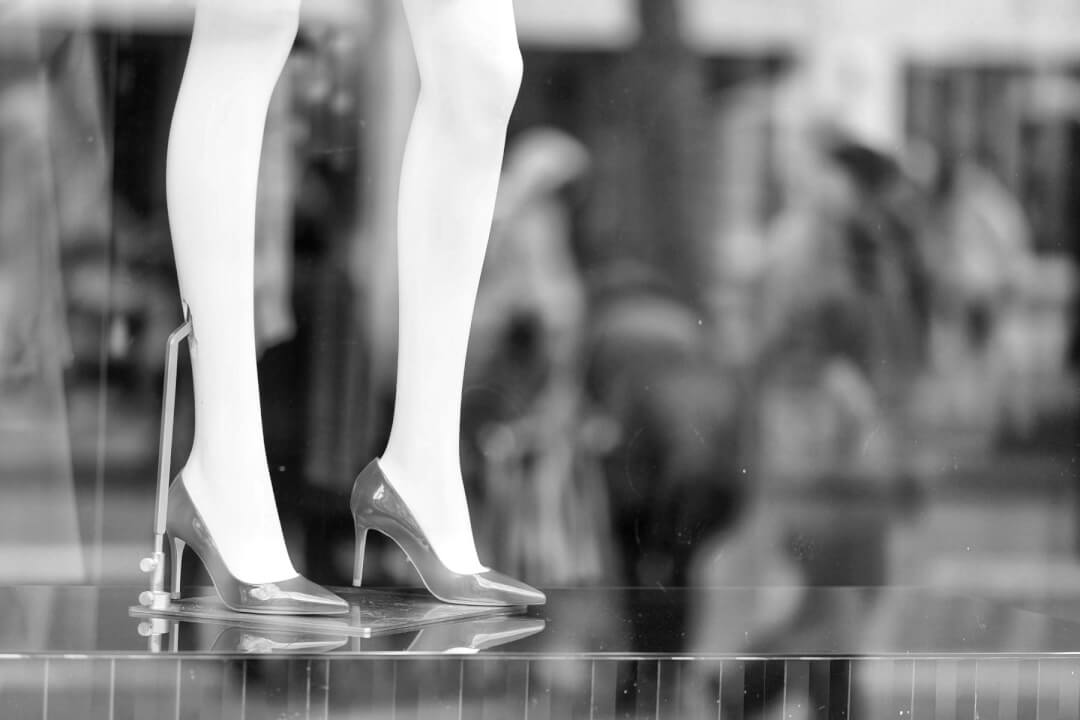
Grounding for Public Speaking: How to Stand With Stability Without Looking Stiff
Before you think about gestures, movement, or stage presence, there is a simpler question:
How are you standing?
Some speakers become restless when attention turns toward them.
They shift constantly from one foot to the other.
Rock backward and forward.
Lock their knees.
Cross their legs.
Lean against the lectern.
Or move without realizing why.
Others go in the opposite direction.
They plant themselves rigidly on the floor and barely move at all.
Neither extreme is necessary.
A useful speaking stance combines stability with freedom to move.
That is what I mean by grounding in public speaking.
What Does Grounding Mean in Public Speaking?
In this context, grounding has nothing mystical about it.
It simply means establishing a stable physical base from which you can:
- breathe comfortably
- speak freely
- gesture naturally
- move deliberately
- remain physically composed when attention or pressure increases
Your feet provide the base.
Your knees remain available rather than locked.
Your upper body does not need unnecessary tension to keep you upright.
From there, you can move when movement serves the communication.
Grounding is not about becoming motionless. It is about having somewhere stable to return to.
Why Your Stance Matters
Speaking is a physical activity.
You breathe.
Your voice is produced through coordinated muscular activity.
You gesture.
You turn toward people and visual material.
You respond physically when challenged or surprised.
A stable posture can provide a useful basis for these activities.
Research has found relationships between posture and voice production, although the evidence does not support simplistic rules such as one universally ideal speaking posture.
More recent experimental work also suggests that reducing postural stability can measurably alter some acoustic properties of speech.
The practical conclusion is modest:
Your physical organization can influence how easily you speak. It deserves attention without turning posture into a theory of personality.
There Is No One Perfect Speaking Stance
You may have encountered precise instructions such as:
“Feet exactly shoulder-width apart.”
“Never shift your weight.”
“Always keep both feet parallel.”
“Stand symmetrically at all times.”
These rules are unnecessarily rigid.
Bodies differ.
Clothing differs.
Shoes differ.
Stages differ.
Communication situations differ.
A useful stance should allow you to stand comfortably, breathe, speak, and move without repeatedly having to organize your body.
The test is functional rather than geometric.
A Useful Neutral Starting Position
As a starting point:
- place your feet approximately hip-width apart
- let your weight feel reasonably balanced
- keep your knees free rather than rigidly locked
- allow your upper body to lengthen naturally
- release unnecessary tension in your shoulders and jaw
- let your arms remain available for natural gestures
Then adjust.
You may prefer one foot slightly forward.
You may naturally carry a little more weight on one side.
You do not need perfect symmetry.
What matters is that you are not constantly fighting your own position.
Feel the Floor
Before an important presentation, take a moment to notice the physical contact between your feet and the floor.
You do not need elaborate visualization.
Simply notice:
- where your weight is
- whether you are leaning forward or backward
- whether one leg is carrying nearly all your weight
- whether your knees are locked
- whether you can breathe comfortably
This gives your attention something concrete.
Then return your attention to the audience and your message.
Grounding should reduce unnecessary self-monitoring, not become another thing to monitor continuously.
Do Not Push Yourself Into the Floor
Trying to look stable can create excessive muscular tension.
You press your feet into the floor.
Tighten your thighs.
Pull your shoulders back.
Brace your abdomen.
Now you may look rigid and make breathing less comfortable.
A stable stance does not require maximum tension.
Think available rather than armored.
Avoid Locking Your Knees
Some speakers straighten their legs until their knees become rigid.
This can make the whole body feel less adaptable.
You want enough muscular activity to remain upright without turning your lower body into a fixed structure.
Small, natural adjustments are normal.
You are a living person, not a statue.
What About Weight Distribution?
You do not need to measure whether exactly 50 percent of your weight rests on each foot.
The useful question is whether your position gives you options.
Can you:
- breathe freely?
- turn toward another part of the room?
- gesture without losing balance?
- take a step naturally?
- remain still for a moment without effort?
If yes, the stance is probably serving you.
Stable Does Not Mean Still
This distinction is essential.
A good speaker may:
- step toward the audience
- move toward a screen
- turn toward another section of the room
- change position during a story
- sit for part of a conversation
Movement can support communication.
The problem is not movement.
The problem is movement without communicative purpose.
Move because the communication invites movement, not because nervous energy needs somewhere to go.
Watch for Repetitive Movement
Common patterns include:
- rocking from heel to toe
- swaying from side to side
- taking the same two steps repeatedly
- shifting weight every few seconds
- pacing continuously
- bouncing slightly through the knees
Speakers are often unaware of these movements.
The audience may notice them quickly.
Repetition can become visually distracting because the movement has no obvious relationship to the message.
Video is very useful here.
Use Stillness Deliberately
Stillness can give an important thought more weight.
You move.
Then stop.
Deliver the central sentence.
Pause.
The absence of movement creates contrast.
This is different from remaining frozen throughout the presentation.
Stillness becomes expressive when movement remains available.
Movement Should Have a Destination
One practical principle:
If you take a step, arrive somewhere.
Avoid walking while every sentence continuously pulls you around the stage.
Instead:
move,
arrive,
stand,
communicate.
Then move again when there is a reason.
This produces calmer visual communication.
Do Not Choreograph Every Step
The opposite mistake is turning movement into choreography.
“At sentence three I move left.”
“At the second argument I step forward.”
“At the conclusion I return to center.”
This can become mechanical.
You may rehearse possibilities.
Then leave enough freedom to respond to the actual room.
Prepare your options more deeply than your choreography.
Your Feet Affect the Rest of Your Body
Try this experiment.
Stand with your feet comfortably apart.
Speak several sentences.
Then:
- cross your ankles tightly
- lean strongly onto one hip
- stand with your feet almost touching
- lock your knees
Speak again.
Notice what changes.
Not what a body-language manual says it should mean.
Notice what happens to:
- breathing
- movement
- gestures
- voice
- your sense of physical freedom
This kind of experimentation is more useful than memorizing rules.
Posture Is Not a Personality Test
Do not assume:
crossed legs mean insecurity,
a wide stance means confidence,
leaning means weakness,
or stillness means authority.
Body language does not work as a fixed dictionary.
Context matters.
Habits matter.
Physical comfort matters.
Culture matters.
The overall communication matters.
Evaluate posture by what it does to the communication, not by attaching personality labels to individual positions.
Grounding and Voice
Your voice does not come from your feet.
Yet the body works as an integrated system.
Postural organization can influence the muscular conditions around breathing and phonation.
A systematic review of research on posture and voice concluded that effective posture can support efficient voice production, while also emphasizing that the evidence connecting specific postural problems and voice disorders is not straightforward.
That nuance matters.
You do not need a supposedly perfect posture to have a good voice.
You need a body that allows the voice to work without unnecessary interference.
Grounding and Breathing
Nervous speakers sometimes attempt to “fix” breathing while speaking.
They take unusually large breaths.
Lift the chest.
Hold themselves rigidly upright.
This can create more self-consciousness.
A more useful starting point is often:
stand comfortably,
release unnecessary tension,
allow the breath to continue,
and speak in phrases that actually fit your available breath.
If a sentence repeatedly leaves you breathless, consider whether the sentence is too long.
Grounding and Nervousness
A stable physical position can give you something useful to do when attention increases:
notice the floor,
release unnecessary tension,
allow a breath,
then return to the message.
This can be helpful.
Do not turn it into a promise that the right stance will eliminate nervousness.
Public-speaking anxiety is influenced by many factors.
And importantly, feeling nervous does not automatically mean performing poorly.
You can be nervous and still communicate very well.
Confidence Does Not Need to Come First
Speakers sometimes wait to feel confident before they allow themselves to speak with presence.
That reverses the problem.
You can begin with behaviors you can influence:
- stand in a workable position
- breathe
- know your opening
- look at the people you are addressing
- say the first sentence clearly
The internal experience may settle as you continue.
Or perhaps some nervousness remains.
Either way, the speech can proceed.
Do Not Perform Confidence With Your Body
Trying to look dominant often produces unnecessary behavior.
An artificially wide stance.
Forced stillness.
An exaggerated chest position.
Oversized gestures.
A fixed facial expression.
You do not need a “power pose” to communicate professionally.
A stable body is useful because it supports communication, not because it proves status.
Grounding and Gestures
A good base allows your hands and arms to remain available.
When the lower body is unstable, gestures can sometimes become compensatory.
When the entire body is rigid, gestures may become restricted or artificial.
Start from a position that leaves your upper body free.
Then let gestures emerge from what you are saying.
You do not need to decide where your hands belong every second.
What Should You Do With Your Hands Before You Begin?
This question causes more concern than it deserves.
A simple starting position is enough.
Let your arms rest naturally.
Or allow your hands to meet lightly in front of you if that feels comfortable.
Then begin speaking.
Once communication starts, gestures usually give the hands something to do.
Avoid gripping your own hands tightly as though they might escape.
Grounding at a Lectern
A lectern can be useful.
It can also become something speakers hold onto.
If you use one:
- stand rather than hang from it
- keep enough space for comfortable breathing
- avoid gripping the edges continuously
- allow gestures when appropriate
- look at the audience rather than allowing the lectern to become a barrier
The lectern supports material and technology.
It does not need to support your body weight.
Grounding With a Handheld Microphone
A handheld microphone changes your available gestures.
It does not need to change your stance dramatically.
Practice beforehand:
- where to hold the microphone
- how close it needs to be
- which hand feels more natural
- how the other hand can gesture
Technical familiarity reduces the temptation to organize your entire body around the microphone.
Grounding With Slides
Slides often pull speakers physically toward the screen.
They turn away from the audience.
Walk toward the projection.
Remain there.
Or repeatedly shift between laptop and screen.
Decide where your primary speaking position is.
Move toward visual material when there is a reason.
Then return your attention to the audience.
The slide is supporting material. It does not become the person you are presenting to.
Grounding During Q&A
Questions change the physical dynamics.
A difficult question can cause speakers to:
- step backward
- lean away
- freeze
- begin pacing
- shift repeatedly
You do not need to suppress every spontaneous movement.
Simply notice whether pressure repeatedly changes your physical behavior in ways that interfere with communication.
When a challenging question arrives:
listen,
allow a moment,
find your stable position,
then answer.
You do not need to respond physically before you respond intellectually.
Grounding in Board Presentations
A boardroom is different from a large stage.
You may speak while seated.
You may stand for only part of the presentation.
Physical restraint often works better than theatrical movement.
If standing, use a stable position that allows you to:
- address the board
- refer to the material
- respond to questions
- move when necessary
Do not imitate keynote-stage behavior in a room where everybody is sitting three meters away.
Presence should fit the environment.
Grounding in Client Pitches
A pitch often benefits from energy.
Energy does not require continuous movement.
You can create energy through:
- clear language
- voice
- facial expression
- relevant gestures
- interaction
- pace
A stable base can make deliberate movement more visible because movement is no longer constant.
Grounding on a Large Stage
A large stage can tempt speakers to use all available space simply because it is there.
You do not need to walk from one side to the other throughout the presentation.
Think in speaking locations.
Stand somewhere.
Establish contact.
Move when there is a communicative reason.
Arrive again.
The larger the stage, the more deliberate movement often needs to become.
Grounding on Camera
Camera framing changes movement.
Small shifts can become more visible.
Repeated rocking can be distracting.
For standing camera presentations:
- check your complete frame
- make sure natural gestures remain visible
- avoid stepping outside the usable area
- test how much movement the shot tolerates
For seated video communication, grounding changes form.
Use the chair and floor to create a comfortable base rather than collapsing into the backrest or holding yourself rigidly upright.
Can You Be Grounded While Sitting?
Yes.
The underlying idea remains the same:
create enough physical stability that the body does not become an unnecessary source of distraction or effort.
When sitting:
- use a chair height that allows a stable position
- place your feet comfortably
- avoid twisting unnecessarily
- leave room to breathe and gesture
- use the backrest when appropriate without disappearing into it
Standing is not inherently more professional.
The format should determine the position.
What About Shoes?
Footwear affects how you experience the floor.
If an important presentation requires shoes you rarely wear, rehearse in them.
This is particularly relevant with:
- high heels
- very stiff shoes
- unfamiliar formal footwear
- slippery soles
Your actual presentation is not the ideal moment to discover how your footwear affects balance or movement.
Practice on the Actual Stage When Possible
A stage may contain:
- steps
- cables
- monitors
- confidence screens
- a lectern
- furniture
- different floor levels
If the appearance matters, inspect the environment beforehand when possible.
Walk through:
- where you will enter
- where you begin
- where the screen is
- where you can move safely
- where you will finish
Familiarity with the environment leaves more attention for communication.
A 60-Second Grounding Check Before You Speak
Immediately before an important presentation:
- Notice your feet. Are you standing comfortably?
- Release your knees. Avoid unnecessary rigidity.
- Release your jaw and shoulders.
- Allow one natural breath.
- Look at the people you are about to address.
- Remember your first thought rather than your entire speech.
Then begin.
Do not continue checking your posture every ten seconds.
Your attention now belongs to the communication.
A Useful Rehearsal Exercise
Record one minute of your presentation.
First, watch it with the sound off.
Ask:
- Do I move continuously?
- Do I repeatedly shift my weight?
- Do I appear rigid?
- Do my movements have a recognizable purpose?
- What changes when I pause?
Then watch with sound.
Ask:
- Does movement support the message?
- Do important statements receive enough physical and vocal space?
- Does tension affect my voice?
Choose one or two useful adjustments.
Do not attempt to redesign every movement.
Professional Feedback Is Better Than Body-Language Guessing
Your own perception while speaking can differ from what is visible from outside.
A movement may feel enormous and appear barely noticeable.
A small habit you hardly register may become obvious on video.
Useful feedback should therefore answer:
- What already works?
- What is distracting?
- What changes under pressure?
- Which adjustment would make the largest difference?
The goal is not perfect posture. It is greater freedom and clearer communication.
→ Professional Impact Analysis
Grounding Is Only One Part of Presence
A stable stance cannot compensate for:
- an unclear message
- weak reasoning
- poor structure
- irrelevant content
- lack of preparation
And an excellent message does not require theatrical body language.
Physical presence works together with:
- clarity
- voice
- facial expression
- gestures
- attention
- audience contact
- the quality of your thinking
Grounding gives the body a useful starting point. The message still has to do the important work.
Five Common Grounding Mistakes
1. Trying to Look Powerful
A wide or rigid stance can become a performance of authority rather than useful posture.
2. Becoming Motionless
Stability should make movement available, not forbid it.
3. Moving Continuously
Movement without purpose can dilute rather than increase presence.
4. Monitoring Your Body Throughout the Speech
Once you begin, your attention belongs primarily to the audience and message.
5. Expecting Posture to Eliminate Nervousness
Physical organization can help.
It is not a cure for every form of public-speaking anxiety.
The Bottom Line
Grounding in public speaking does not require imaginary roots, mysterious energy, or a special power pose.
It requires something much simpler.
A physical base that allows you to:
- stand comfortably
- breathe
- speak
- gesture
- move
- pause
- respond
without repeatedly fighting your own body.
Find a stable starting position.
Release unnecessary tension.
Use stillness when it helps.
Move when movement serves the communication.
Then stop thinking about your feet.
Ground yourself so that your attention is free to go where it belongs: to your message and the people in front of you.
Preparing an Important Presentation, Pitch, or Speech?
When the presentation matters, physical presence is only one part of the preparation.
We can work directly with your actual presentation, including:
- objective and core message
- structure and argumentation
- opening and conclusion
- voice
- stance, movement, and gestures
- facial expression
- executive presence
- slides and visual communication
- questions and difficult moments
- realistic rehearsal
- professional feedback
I work primarily with business owners, managing directors, executives, and senior leaders.
In person in Berlin. Online throughout Germany.
→ Presentation & Speech Preparation
→ Professional Impact Analysis
→ Discuss Your Upcoming Presentation
Research Note
Research supports a relationship between posture and aspects of voice production, although the evidence does not justify a single universal “correct” speaking posture.
A systematic review found that effective posture can support efficient voice production, while the relationship between particular postural problems and voice disorders remains more complex.
→ Associations Between Posture, Voice, and Dysphonia: A Systematic Review
A 2026 experimental study also found that deliberately perturbing postural stability changed some acoustic characteristics of speech during face-to-face interaction, although it did not reduce speech fluency.
→ Postural Stability and Acoustic Properties of Speech
Research on public-speaking anxiety also offers an important caution: subjective nervousness and actual speaking performance are not the same thing. Feeling anxious does not automatically mean performing poorly.
→ Public Speaking Anxiety and Speech Performance
About Karsten Noack
I work with business owners, managing directors, executives, and senior leaders on important presentations, speeches, pitches, professional impact, executive presence, and communication under pressure.
My background combines engineering, management, business consulting, marketing, psychology, communication, and more than 25 years of coaching and presentation work.
Preparing Important Speeches and Presentations
The Art of Effective Communication
Those who do not speak are not heard, and even those who do speak are not always successful. True success in communication requires mastering a few additional, critical steps to ensure your message resonates.
Make Your Message Shine
Do you want your message to be convincing and your personality to shine? I can help you prepare your speeches and presentations to achieve exactly that. Whether you need comprehensive guidance or just a few tweaks, you decide the level of support that fits your needs. At a minimum, I recommend a test run with professional feedback to fine-tune both your delivery and your content. This helps you understand how you and your message are perceived, identify what works well, and determine areas for improvement.
Why Wait for Feedback?
Why wait until after your real performance to receive valuable feedback, when it's too late to adjust? Early preparation is key. As the saying goes: 'Luck is what happens when preparation meets opportunity.' With thorough preparation, you will not only feel more confident but will also be well-equipped to make a lasting impact.
Tailored Support to Fit Your Goals
You can decide where the effort is most worthwhile, based on the expected benefits. I offer support covering all areas of effective communication, including psychology, language, structure, voice, body language, storytelling, rhetorical techniques, and the use of media like PowerPoint. My goal is to help you deliver a well-rounded, impactful presentation.
Flexible Meeting Options
Not in Berlin? No problem. We can meet via telephone or video call. Of course, visiting Berlin can also be an enriching experience, and I am happy to welcome you here.
Overcome Stage Fright
Many people struggle with intense stage fright, which can cause their performance to fall short of its true potential. With my guidance, you can overcome these challenges and deliver your best possible performance. Together, we'll turn anxiety into confidence, ensuring that your message and personality shine through.
Professional Feedback for Important Presentations
How Do You Actually Come Across?
You know what you want to communicate. The more useful question is: What actually reaches your audience?
For more than 25 years, I have worked with speeches, presentations, pitches, and other important professional communication. My feedback focuses on what matters most in your specific situation — not on a generic checklist.
Depending on your presentation, we may look at:
- your core message and structure
- clarity and argumentation
- opening and conclusion
- voice and body language
- executive presence
- slides and visual communication
- audience engagement
- questions and difficult moments
You receive clear, practical feedback on what already works, what may weaken your impact, and which adjustments are most likely to make a meaningful difference.
The goal is not a perfect performance. It is a presentation that reaches the people who need to understand, trust, or act on your message.
Bring a Real Presentation
If an important presentation, pitch, speech, or board appearance is ahead, we can work directly with your actual situation — including rehearsal and detailed feedback.
In person in Berlin. Online throughout Germany.
→ Presentation & Speech Preparation
Contact Me for More Information
If you have specific questions or want to know more about how I can help, just ask me directly. For questions that might interest others, please feel free to post them in the comments section below.
Looking for Professional Support?
If you're interested in coaching, training, or consulting, have organizational questions, or would like to schedule an appointment, the best way to reach me is through this contact form (where you can choose whether to provide your personal data) or by email at mail@karstennoack.com. You can find the privacy policy here.
Transparency and Frequently Asked Questions
Transparency is important to me. To help you get started, I've provided answers to frequently asked questions about myself (profile), the services I offer, fees, and the process of getting to know me. If you like what you see, I'd be delighted to work with you.

Props in Presentations: 12 Rules for Using Them Effectively
How should you use props in a presentation? Learn 12 practical rules, examples, common mistakes, and how to use physical objects in pitches, speeches, and executive presentations.

How to Start a Pitch: 7 Strong Opening Strategies
How should you start a business pitch? Discover 7 effective opening strategies for client pitches, board presentations, investor pitches, and important proposals.

Professional Impact Analysis: Discover How Others See You
How do others experience you? Professional impact analysis for executives and business leaders: voice, body language, communication, presence, video feedback, and blind spots.

Facial Expressions in Public Speaking: 12 Practical Rules
How should you use facial expressions in public speaking? Learn 12 practical rules for presentations, pitches, speeches, Q&A, executive presence, and video.

KISS Principle in Communication: Keep Complex Ideas Clear
How does the KISS principle improve communication? Learn how to simplify complex presentations, executive messages, pitches, and decisions without oversimplifying them.

Five-Finger Speech Structure: A Simple Presentation Framework
Use the Five-Finger Speech Structure to organize presentations, pitches, meeting contributions, and impromptu speeches: situation, direction, path, value, and next step.
Speech Anxiety: An Obstacle to Your Career
Missing out on a promotion or leadership role—not due to a lack of skills, but because fear holds you back from speaking up. Speech anxiety, if left unchecked, can sabotage your career. But what if you could turn that fear into strength? This article will show you how to understand, manage, and overcome speech anxiety—so you can confidently seize every opportunity.

How to Read a Speech Without Sounding Like You’re Reading
How can you deliver a speech from a manuscript without sounding as though you are reading? Learn how to write for the ear, rehearse, use pauses, eye contact, and teleprompters effectively.

Being right at all costs. The price we pay for needing to be right.
Persuading without arguments, assertiveness, winning without consideration, knockout by nasty tricks, black magic, manipulating. It is a coveted feeling to be right.
Speak Up at Work: How to Raise Concerns Effectively
Some people have an opinion that deserves attention. Often, however, this opinion is not heard. Then it is time to decide whether to keep it that way or to share the point of view more clearly with others. Not everyone dares this step. What about you?

20 tips for humor in speeches and presentations
Do you want the attention of your audience? Humorously move your audience before the seat hurts. Humor relaxes. It resolves tense, stressful situations. Humor has some positive effects. Appropriate humor can be used effectively in many situations. Find out what is worth paying attention to.

Speaking with your hands in your pockets during conversations, speeches and presentations?
Where to put your hands in conversations and during presentations? Just put your hands in your trouser pockets and the problem is solved. Many inexperienced speakers think this is quite a good idea. I (and most of the audience) don’t think it’s so good. Why? This question will be answered.
Published: May 11, 2007
Author: Karsten Noack
Revision: November 19th, 2024
German version: https://www.karstennoack.de/was-darf-die-vorbereitung-einer-praesentation-kosten/
0 Comments