
Body Language: How Nonverbal Communication Shapes Your Impact
Your Body Is Part of the Message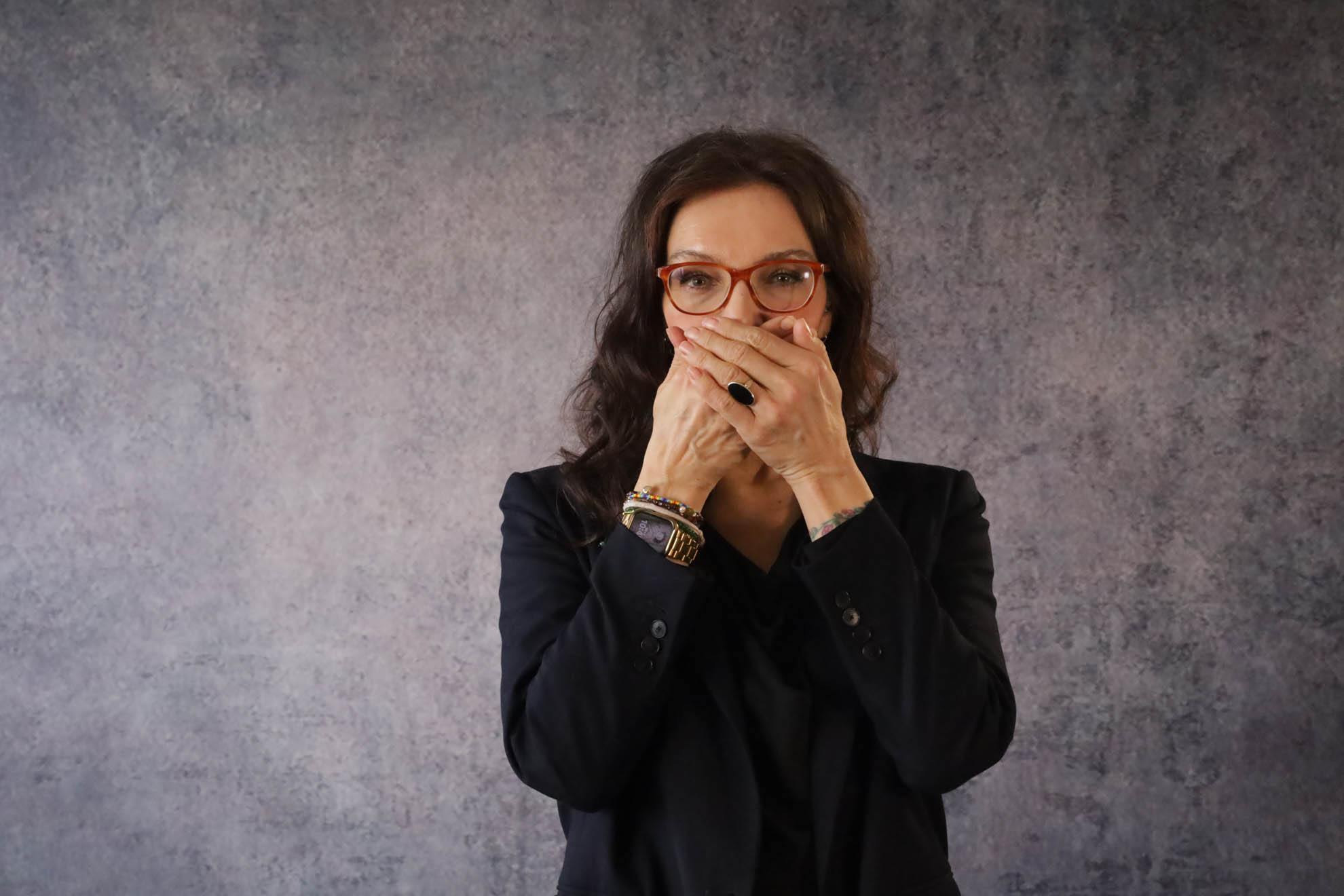
Body Language: How Nonverbal Communication Shapes Your Impact
Your Body Is Part of the Message
We communicate with words.
And with much more than words.
Posture.
Gestures.
Facial expressions.
Eye contact.
Movement.
Distance.
Voice.
Pauses.
The way we enter a room.
The way we listen.
The way we respond when something unexpected happens.
All of these signals contribute to how other people experience us.
That makes body language particularly relevant in professional situations where credibility, trust, authority, connection, and presence matter.
Yet there is an important principle:
Body language is communication — not mind reading.
Understanding that distinction makes body language considerably more useful.
What Is Body Language?
Body language is part of nonverbal communication.
It includes:
-
posture
-
gestures
-
facial expressions
-
eye contact
-
head movements
-
orientation of the body
-
movement
-
use of space
-
physical distance
-
touch
-
breathing patterns
-
visible tension and relaxation
In practice, these elements interact with another powerful nonverbal channel:
the voice.
Volume, pace, rhythm, emphasis, pauses, and tone all influence how a message is perceived.
People experience the whole picture.
Body Language Is Always Part of the Message
Imagine someone saying:
“I am very interested in your proposal.”
Now imagine three different versions.
In the first, the person leans slightly forward, looks at you, asks questions, and responds actively.
In the second, the person looks repeatedly at the clock and turns away.
In the third, the person remains almost completely still with a neutral expression.
The words are identical.
The experience is different.
This does not mean that one version reveals the person’s true thoughts.
It means that communication is interpreted through multiple channels at the same time.
There Is No Body-Language Dictionary
One of the most persistent myths about body language is the idea that every gesture has a fixed meaning.
Crossed arms mean rejection.
Looking away means lying.
Touching the nose means deception.
Hands in pockets mean insecurity.
A particular sitting position means dominance.
Human beings are more complicated than that.
Someone may cross their arms because they are cold.
Look away because they are thinking.
Touch their face because it itches.
Sit back because the chair is uncomfortable.
One isolated signal rarely provides enough information for a reliable conclusion.
Context matters.
Look for Context, Clusters and Change
When observing nonverbal behavior, three things are particularly useful.
Context
What is happening?
The same behavior can have different meanings in different situations.
Clusters
Which signals appear together?
Several related observations can be more informative than one isolated gesture.
Change
What changed?
A shift in posture, voice, movement, facial expression, or eye contact can be interesting when it occurs in response to a particular topic or moment.
Even then, it is evidence for curiosity rather than certainty.
A useful interpretation sounds like:
“Something may have changed here.”
A risky interpretation sounds like:
“I know exactly what this person is thinking.”
Observe First. Interpret Later.
One of the most useful skills in reading body language is surprisingly simple:
Separate observation from interpretation.
Observation:
“He leaned back.”
Interpretation:
“He rejected my proposal.”
Observation:
“She became quieter.”
Interpretation:
“She is insecure.”
Observation:
“He looked away before answering.”
Interpretation:
“He is lying.”
The observation may be accurate.
The interpretation is a hypothesis.
Keeping those two levels separate protects us from reading our own expectations into another person’s behavior.
Congruence Creates Credibility
Body language becomes particularly interesting when we consider congruence.
Do words, voice, facial expression, posture, and behavior support each other?
Someone says:
“I am delighted to be here.”
The voice is flat.
The face shows little expression.
The body is turned toward the door.
Again, we cannot know exactly what the person feels.
Yet the signals may create an impression of inconsistency.
Compare that with someone whose voice, expression, attention, and words fit naturally together.
That person is often experienced as more credible.
Credibility grows when the different parts of communication tell a coherent story.
Body Language and Presence
Presence is difficult to reduce to one gesture.
It emerges from the whole person in the situation.
How grounded do you appear?
Where is your attention?
How do you use your voice?
How do you respond to other people?
How much unnecessary movement is there?
How comfortable are you with pauses?
Do your words and behavior fit together?
Presence is less about performing confidence.
It is more about being sufficiently connected with yourself, your message, and the people around you.
Executive Presence
Body language receives particular attention when someone has leadership responsibility.
Executives are observed.
How do they enter a room?
How do they listen?
How do they respond to disagreement?
What happens when pressure rises?
How do they communicate a difficult decision?
How do they behave when they do not immediately know the answer?
Executive Presence is sometimes confused with dominance.
That is too narrow.
A person can be quiet and have considerable authority.
Warmth can coexist with strength.
Thoughtfulness can coexist with decisiveness.
Listening can increase rather than reduce presence.
The objective is not to imitate a stereotypical executive.
It is to develop a professional presence that fits your personality, role, and responsibility.
Posture
Posture influences both visibility and perception.
A stable posture can support calmness and presence.
An excessively rigid posture can appear controlled or tense.
Constant shifting can distract.
The useful question is rarely:
“What is the perfect posture?”
A better question is:
“Which posture allows me to be present, breathe comfortably, move naturally, and communicate effectively?”
Stability helps.
So does flexibility.
Gestures
Gestures can support meaning.
They can emphasize.
Structure.
Illustrate.
Express energy.
Make size, direction, contrast, and relationships visible.
Natural gestures often develop from the thought itself.
That is why prescribing exact gestures can be counterproductive.
“Use your right hand here.”
“Make this power gesture there.”
“Hold your hands exactly like this.”
The result can quickly look rehearsed.
Instead, ask:
Are your hands available?
Do your gestures support your words?
Are movements clear enough to be perceived?
Are repetitive habits distracting from your message?
The goal is not more gestures.
The goal is useful, natural expression.
What Should You Do With Your Hands?
This is one of the questions I have heard most often from speakers.
My favorite answer is:
Give them something meaningful to do.
When people become self-conscious, their hands suddenly seem like unfamiliar objects attached to their arms.
They hide them.
Grip them.
Rub them.
Play with objects.
Or try to control every movement.
A more useful approach is to return attention to communication.
What are you explaining?
What are you emphasizing?
Where is your attention?
When the mind reconnects with the message, the hands often become more natural as well.
Facial Expressions
The face provides a great deal of social information.
Interest.
Surprise.
Concentration.
Warmth.
Confusion.
Tension.
Many other states can influence facial expression.
Yet the same caution applies:
A facial expression is not a reliable translation of another person’s private thoughts.
People differ.
Some are highly expressive.
Others show relatively little.
Cultural and individual differences matter.
Context matters.
The useful skill is attentive observation rather than instant diagnosis.
Eye Contact
Eye contact can create connection.
It can signal attention.
Help regulate conversations.
And make communication feel more direct.
Yet rigid rules are rarely useful.
“Maintain eye contact for exactly X seconds.”
“Never look away.”
“Always look directly into someone’s eyes.”
That can create remarkably unnatural communication.
Natural eye contact has rhythm.
We connect.
Look away to think.
Return.
Respond.
In groups, we distribute attention.
In presentations, eye contact helps transform an audience from an anonymous mass into individual human beings.
The objective is connection rather than staring.
Personal Space and Distance
Distance communicates as well.
How close do people stand?
How is a table used?
Who chooses where to sit?
How are chairs arranged?
What happens when someone moves closer?
Or farther away?
Personal space is influenced by culture, familiarity, context, personality, hierarchy, and environment.
Respecting these differences matters.
There is no universal ideal distance.
The appropriate distance is the one that supports the relationship and situation.
Movement and Space
Movement can add energy and help structure communication.
It can also become distracting.
Some speakers pace continuously.
Others remain frozen in one spot.
Both may be responses to pressure rather than deliberate choices.
Useful movement has a reason.
You move because the situation invites movement.
You change position to address another part of the room.
You step forward because the moment becomes more direct.
You stop because stillness gives a sentence more weight.
Movement becomes powerful when stillness is also available.
The Power of the Pause
A pause has no words.
Yet it communicates.
It can create emphasis.
Give people time to think.
Signal confidence.
Allow a difficult message to land.
Create space before answering.
Under pressure, pauses often disappear.
People accelerate because silence feels uncomfortable.
Learning to tolerate a moment of silence can significantly change professional presence.
Sometimes the strongest body-language intervention is simply:
Stop moving. Breathe. Look. Then continue.
Body Language in Conversations
In conversations, body language serves two important functions.
It communicates something about us.
And it provides information about the interaction.
Is the other person still engaged?
Has something changed?
Did a particular topic create a reaction?
Is the pace appropriate?
Does someone seem ready to speak?
Does the interaction need more space?
These observations help us adapt.
The objective is not to decode the other person.
It is to become more responsive to what is happening between you.
Body Language in Negotiations
Negotiations naturally increase attention to nonverbal signals.
Who appears confident?
Who hesitates?
Who reacts to which proposal?
Who speaks first?
Who interrupts?
Who creates silence?
These observations can be useful.
They can also tempt us into overinterpretation.
A negotiator who believes they can reliably “read” every movement may become less perceptive because they stop asking questions.
Use body language as additional information.
Then verify important assumptions through communication.
Can Body Language Reveal Lies?
This question deserves a clear answer.
There is no single body-language signal that reliably proves someone is lying.
People may become nervous because they are lying.
They may also become nervous because they fear being falsely accused.
They may avoid eye contact because of discomfort, culture, personality, cognitive effort, or many other reasons.
Some people lie while appearing remarkably calm.
Attempts to detect deception from individual gestures create a dangerous illusion of certainty.
A more responsible approach considers:
content,
consistency,
context,
evidence,
changes in behavior,
and careful questioning.
Body language can give you reasons to become curious.
It does not provide a dependable lie detector.
Body Language Under Pressure
Pressure changes behavior.
Breathing becomes shallower.
Movements become faster.
The shoulders rise.
Gestures become smaller or more repetitive.
Eye contact changes.
The voice may become tighter.
This is one reason body language work should include more than external technique.
If someone tries to control every visible symptom while their attention is dominated by pressure, communication can become even more strained.
A better approach works with both sides:
the internal state
and the external expression.
Body Language in Presentations and Speeches
On stage or in a presentation room, nonverbal communication becomes especially visible.
Useful questions include:
Where do you stand?
How do you begin?
How do you connect with the audience?
What do you do while listening to a question?
How do you move?
When do you remain still?
Do your gestures support your message?
Can everyone see your facial expressions?
How do you use pauses?
What happens to your body language when you become nervous?
Video feedback can be particularly valuable here.
What feels enormous from inside may be barely visible.
And something you never noticed may be surprisingly distracting on camera.
Body Language on Camera
Camera communication changes the environment.
The audience may be physically absent.
Eye contact becomes lens contact.
Small movements become more visible.
Framing matters.
Posture matters.
Facial expression matters.
Voice often carries even more of the communication.
The solution is rarely to become more theatrical.
Usually, it is to understand how the medium changes perception and then adapt while remaining natural.
Mirroring
People sometimes naturally become more similar in posture, rhythm, gestures, or speaking style when rapport develops.
This is often called mirroring.
Used mechanically, it can become awkward very quickly.
If someone crosses their legs and you immediately cross yours, then they touch their face and you touch yours, you may create an entirely different impression than intended.
Rapport is broader than imitation.
Listen.
Respond.
Find a compatible rhythm.
Show genuine interest.
Allow coordination to emerge naturally.
Cultural Differences
Body language is influenced by culture.
Eye contact.
Distance.
Touch.
Gestures.
Facial expression.
Status behavior.
Ways of greeting.
The meaning and appropriateness of these signals can vary considerably.
This is another reason universal body-language rules deserve caution.
When communicating internationally, curiosity is more useful than certainty.
Observe.
Learn.
Ask.
Adapt.
Improve Your Own Body Language
Body language can be developed.
The most useful process is usually more practical than memorizing gestures.
1. Increase awareness
Notice what you do in real situations.
2. Get useful feedback
Self-perception has limits.
3. Use video
Especially for presentations, media, and online communication.
4. Identify relevant habits
Focus on behaviors that actually influence your communication.
5. Connect behavior with intention
What do you want to communicate?
6. Practice in context
A board meeting requires different presence from a keynote.
7. Integrate rather than perform
The objective is for useful behavior to become increasingly natural.
The Paradox of Body Language
Here is one of the most important lessons:
The harder you try to control every aspect of your body language, the less natural your communication may become.
Monitor your hands.
Control your face.
Check your posture.
Remember your eye contact.
Watch your feet.
Think about your voice.
And suddenly very little attention remains for the person in front of you.
Body language works best when technique gradually becomes integrated.
Learn.
Practice.
Receive feedback.
Then return your attention to what matters:
the message and the people.
Body Language Starts on the Inside
External behavior and internal state influence each other.
How you stand can affect how you experience a situation.
How you experience the situation can affect how you stand.
That interaction is useful.
Yet trying to create confidence exclusively through a pose is rarely enough.
A stronger professional presence develops when several things support each other:
clarity,
preparation,
inner position,
voice,
body language,
message,
and connection.
That is why body language is best understood as part of communication rather than as a separate collection of tricks.
Body Language That Fits You
The objective is not perfect body language.
There is no universal executive posture.
No ideal number of gestures.
No magical eye-contact formula.
No gesture that automatically creates charisma.
What matters is congruence.
Your behavior should fit:
your personality,
your role,
your message,
the people around you,
and the situation.
That creates something more valuable than polished technique:
credible presence.
When Your Professional Impact Matters
Body language becomes particularly relevant when professional visibility increases.
An important presentation.
A negotiation.
A leadership conversation.
A board meeting.
A media appearance.
A new executive role.
In these situations, body language is one part of a larger picture.
Message, voice, presence, role, strategy, and communication need to work together.
For developing your professional presence:
[Executive Presence & Personal Impact]
For important conversations, negotiations, presentations, and speeches:
For presentation development:
One Final Thought
Pay attention to body language.
Learn to observe more carefully.
Become aware of your own patterns.
Use feedback.
Experiment.
And keep one principle in mind:
People are more complex than their gestures.
Body language gives us valuable information about communication.
Its greatest value comes from helping us become more attentive — to ourselves, to other people, and to what is happening between us.
Contact Me for More Information
If you have specific questions or want to know more about how I can help, just ask me directly. For questions that might interest others, please feel free to post them in the comments section below.
Looking for Professional Support?
If you're interested in coaching, training, or consulting, have organizational questions, or would like to schedule an appointment, the best way to reach me is through this contact form (where you can choose whether to provide your personal data) or by email at mail@karstennoack.com. You can find the privacy policy here.
Transparency and Frequently Asked Questions
Transparency is important to me. To help you get started, I've provided answers to frequently asked questions about myself (profile), the services I offer, fees, and the process of getting to know me. If you like what you see, I'd be delighted to work with you.
New articles

Facial Expressions in Public Speaking: 12 Practical Rules
How should you use facial expressions in public speaking? Learn 12 practical rules for presentations, pitches, speeches, Q&A, executive presence, and video.

Beware of manipulation: Intentional mirroring in conversations
Intentional mirroring is the deliberate imitation of other people to make them feel good. It serves to promote rapport and can also be used against the interests of the mirrored.

Body language: What can actually be read from the eyes? Not only wishes!
What can be read from the eyes? More than wishes! The eyes have a big part in human facial expressions. There is a reason why the eyes are called the mirror of the soul. They reveal a lot about our feelings and thoughts, no matter if we want it or not. Eyes can smile, radiate joy, permeate, agree, question, doubt or reject. Learn to read body language.

Speaking with your hands in your pockets during conversations, speeches and presentations?
Where to put your hands in conversations and during presentations? Just put your hands in your trouser pockets and the problem is solved. Many inexperienced speakers think this is quite a good idea. I (and most of the audience) don’t think it’s so good. Why? This question will be answered.
Body language expert explains Trump’s awkward day at the NATO Summit
It may be mere speculation that Donald Trump is compensating for something. Yes, certain behavior may give that impression. Let me analyze Donald Trump’s body language when he met Angela Merkel, Emmanuel Macron, Duško Marković and other leaders at the NATO-Summit in Brussels.
Published: June 21, 2001
Author: Karsten Noack
Revision: November 19th, 2024
Translation: ./.
German version: https://www.karstennoack.de/koerpersprache/
K:
H:
T: RR
#232
0 Comments