
Executive Media Coaching & Interview Preparation
One-to-one preparation for television, radio, podcast, and online interviews. Clear messages, credible answers, and composed delivery.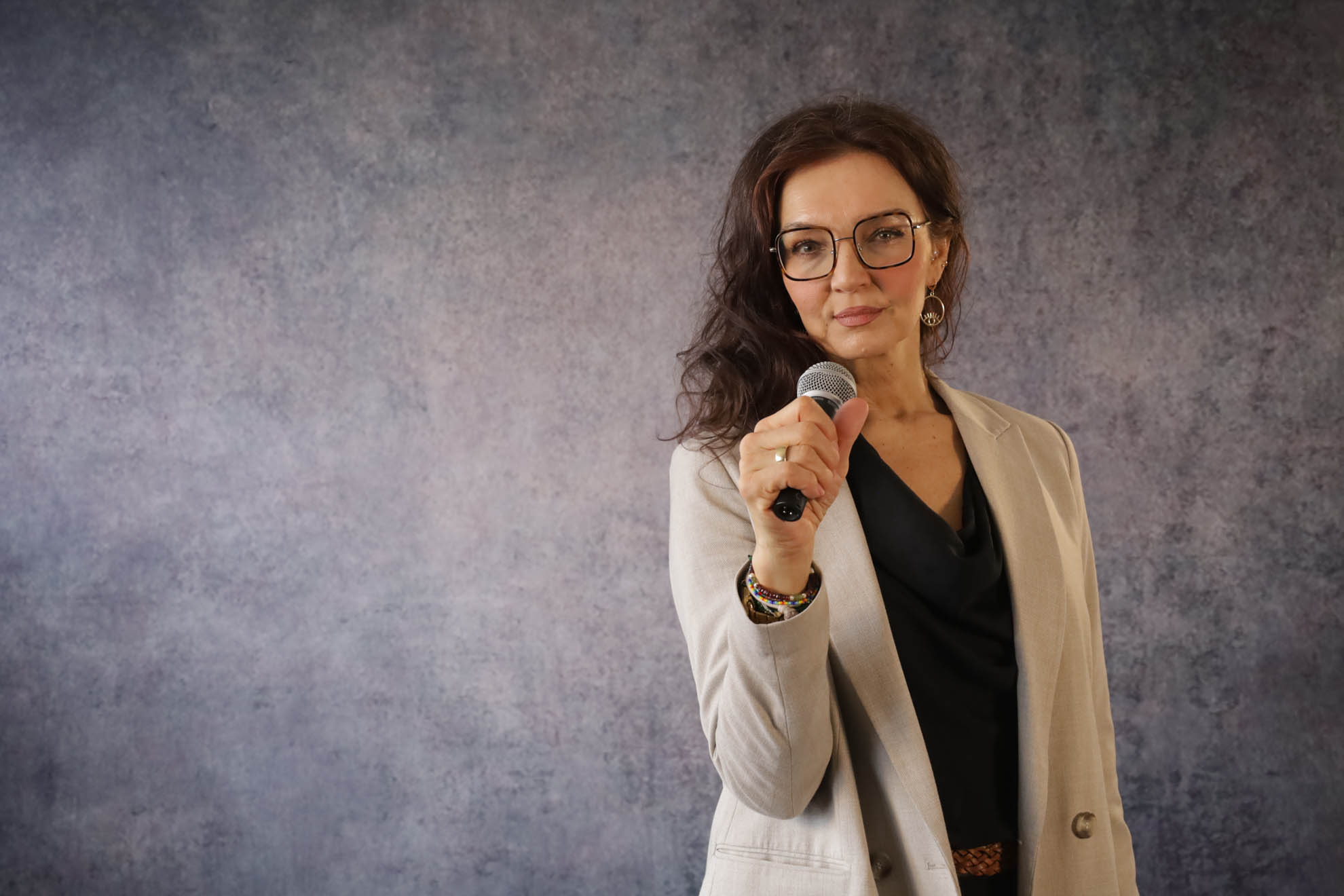
Prepare for the Interview Ahead
A journalist wants your response to a business decision. A television interview will put your company in the spotlight. A podcast offers space to explain your perspective in depth.
Each format brings different expectations. Your preparation needs to account for the topic, the audience, and the questions you may face.
I work one-to-one with executives, business owners, and senior leaders to prepare important media appearances.
Together, we clarify what you want to communicate, develop accurate and accessible answers, and rehearse demanding moments.
In Berlin and online.
Discuss Your Upcoming Interview
Preparation for Your Actual Format
Television and Video Interviews
We work on concise answers, camera presence, voice, and responses to follow-up questions.
Preparation takes account of whether the interview is live or recorded, who will conduct it, and how much time is available.
Radio and Podcasts
Your voice, language, and examples carry the message.
We practice explaining ideas clearly, sustaining a natural conversation, and giving listeners enough context to follow your reasoning.
Online Interviews
We prepare both your communication and the setting in which it will be received.
This can include camera position, eye line, lighting, audio, and how you use notes while remaining engaged with the interviewer.
Interviews About Sensitive Business Issues
Organizational change, criticism, project difficulties, and consequential decisions deserve particularly careful preparation.
We examine the verified facts, your responsibilities, the audience’s concerns, and the information you are authorized to share.
Where appropriate, our work builds on the positions and guidance agreed with your communications team and specialist advisers.
Clarify What the Audience Needs to Understand
We start with the purpose of the appearance.
Why are you taking part? Who will watch or listen? What do they need to understand? Which questions deserve a direct answer?
From there, we develop a small set of key messages supported by relevant facts and examples.
The aim is language that is accurate, understandable, and natural for you to use.
Prepare Clear Answers to Difficult Questions
A challenging question may concern a decision, a delay, a contradiction, a result, or something you have said previously.
We identify likely questions and examine the substance of your answers.
This includes practicing how to:
-
Answer the question directly and add useful context.
-
Explain the reasoning behind a decision.
-
Distinguish established facts from estimates and open questions.
-
Correct an inaccurate premise calmly.
-
Acknowledge information that requires further checking.
-
Explain appropriate boundaries around confidential matters.
-
Respond to follow-up questions and interruptions.
Credibility depends on both the accuracy of your answer and the way you engage with the question.
Make Complex Topics Accessible
Your audience may have a different level of knowledge from yours.
We work on explaining the essential point first, then adding the detail needed to understand it.
Concrete examples can help: a relevant project, a practical consequence, or a comparison that accurately illustrates the issue.
We also check whether a statement remains clear when heard on its own. That matters when an interview is shortened or individual answers are quoted.
You can prepare the clarity of your contribution. Editorial decisions remain with the outlet.
Rehearse Under Realistic Conditions
We practice the interview aloud.
I ask questions, follow up on your answers, introduce objections, and adjust the pace to reflect the expected format.
Then we review what worked and what deserves attention.
An answer may need a clearer opening, stronger evidence, a shorter explanation, or a more direct response to the concern behind the question.
We refine it and rehearse again.
Where useful and agreed, recorded rehearsal can provide focused feedback on voice, wording, pace, and camera presence.
Develop a Composed, Natural Presence
The way you speak influences how people receive your message.
We can work on pauses, emphasis, posture, eye contact, and the balance between professional authority and approachability.
If pressure affects your pace or concentration, we practice ways to pause, regain your bearings, and return to the point.
The aim is delivery that fits your role and allows your knowledge and judgment to come through.
What We Can Develop Together
Depending on your starting point and the agreed scope, preparation may produce:
-
A clear purpose for the appearance.
-
A concise set of key messages.
-
Supporting facts and relevant examples.
-
A working list of likely questions.
-
Rehearsed answers to demanding questions.
-
An opening or closing statement, where the format allows.
-
Practical priorities for voice and camera presence.
-
A plan for handling uncertainty and sensitive topics.
These provide a foundation for a responsive conversation.
Business Context and Communication Experience
My background combines management, business consulting, marketing, psychology, and more than 25 years of coaching and communication work.
I bring these perspectives together when preparing executives for situations where their words carry professional and reputational weight.
Our work focuses on your actual appearance, the substance of your message, and your ability to communicate it clearly.
Individual Sessions in Berlin and Online
Preparation is available one-to-one in Berlin and by video.
Online sessions are especially practical for remote interviews and allow us to rehearse in the setting you expect to use.
We agree on the scope according to the format, subject, available material, and deadline. Substantial research or material review outside sessions is agreed separately in advance.
Please mention any requirements for handling sensitive information when you inquire.
View Pricing & Booking Details
Tell Me About Your Upcoming Appearance
Use the form below to briefly describe:
-
The outlet, program, or podcast, if known.
-
The subject and your role.
-
The date and expected duration.
-
Whether the appearance is live, recorded, or still being arranged.
-
The questions or situations you particularly want to prepare for.
-
Any existing briefing or agreed messages.
A short outline is enough for the initial inquiry. We can then agree on which materials would be useful to review.
Make Your Media Appearance a Success
Media opportunities often arise quickly and unexpectedly. A journalist asks for your opinion on a topic you know well, with questions you can easily answer. But once you’re in front of the camera or live in the studio, adrenaline kicks in—and not in a pleasant way. Concentration wavers, answers feel out of reach, and navigating the moment becomes increasingly challenging.
High-pressure scenarios like this can arise in an instant. Can you handle microphones, cameras, bright lights, and probing questions—whether live or recorded? Are you confident you can respond effectively, or do you risk drawing a blank and freezing under pressure?
Even the best public speakers have faced these moments. But since your credibility and message are on the line, it’s essential to rise above. To leave a lasting impression, you need to:
- Formulate clear, concise statements.
- Maintain a confident and convincing presence.
- Handle tough or irrelevant questions with ease.
Back to the Beginning! — What I Offer: Individual Preparation
I am the most spontaneous speaker in the world because every word, every gesture and every retort has been carefully rehearsed.
George Bernard Shaw
To make a lasting positive impression on journalists and audiences, preparation is key. With my experience in front of the camera and addressing large audiences, I can guide you through the rules of media engagement and provide personalized coaching to:
- Strengthen Your Focus:
Stay composed and retrieve key arguments under pressure. - Clarify Your Message:
Communicate your ideas concisely and convincingly. - Handle Provocations Confidently:
Respond effectively to irrelevant or uncomfortable questions. - Optimize Your Presence:
Enhance your charisma, vocal power, facial expressions, and gestures. - Hone Your Key Messages:
Present your opinions, ideas, and expertise with precision. - Be Quotable:
Deliver memorable and impactful soundbites. - Establish Yourself as an Expert:
Build credibility and trust in your message.And now a warm welcome to our guest live in the studio…
Be prepared to shine in the spotlight. Let’s make sure you and your message leave a lasting impression!
Your Media Coach
Media appearances can be unpredictable. Are you ready to face microphones, cameras, and bright lights while handling tough questions or competing voices? Can you respond confidently, or do you risk being caught off guard?
I can help you navigate these high-stakes scenarios with confidence and clarity. For years, I’ve supported professionals in presenting themselves and their messages persuasively. In our sessions, we’ll focus on what matters most, helping you:
- Be fully present in the moment.
- Access your knowledge and skills under pressure.
- Deliver your message effectively and with impact.
Drawing on my expertise in marketing, psychology, and communication, I’ll provide the tools you need to succeed in media appearances, whether live or recorded.
Learn more about how I can help in my profile.
Contact Me for More Information
If you have specific questions or want to know more about how I can help, just ask me directly. For questions that might interest others, please feel free to post them in the comments section below.
Looking for Professional Support?
If you're interested in coaching, training, or consulting, have organizational questions, or would like to schedule an appointment, the best way to reach me is through this contact form (where you can choose whether to provide your personal data) or by email at mail@karstennoack.com. You can find the privacy policy here.
Transparency and Frequently Asked Questions
Transparency is important to me. To help you get started, I've provided answers to frequently asked questions about myself (profile), the services I offer, fees, and the process of getting to know me. If you like what you see, I'd be delighted to work with you.
What clients say
Thank you again for your great work with me Karsten. The television interview was a great success. I’ll keep in touch!
Anne Lee
Berlin, Germany
Karsten, thank you for our interview coaching session. The pleasure was all mine. I thank you for everything. I was prepared for all the tricky questions. Having spent that session with you was great.
Stephan Schmidt
Berlin, Germany
Karsten helped me tremendously with my radio and TV interviews. He is a professional and doesn’t waste a minute and gets right to the heart of the matter.
Sylvia Miller
Paris, France
When you invest in a session with Karsten Noack you’ll learn how to be present in front of the camera. The exercises and guidance of this trainer are invaluable.
Miguel Gonçalves
Frankfurt, Germany

Think twice before talking to the media
You get a call from a reporter who wants to interview you. Because you like the idea, you want to confirm it right away. Wait a minute!
Essential recommendations for media interviews
What you should keep in mind when being interviewed by the media. Here you will find 19 basic recommendations to help you and your message to be compelling in the media.
26 tips for mastering television interviews
Most of the time it happens unexpectedly. That’s why you’ll find tips for preparing for and participating in television interviews here.
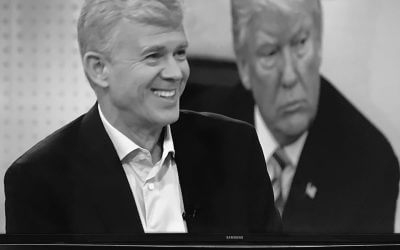
Body language expert explains Trump’s awkward day at the NATO Summit
It may be mere speculation that Donald Trump is compensating for something. Yes, certain behavior may give that impression. Let me analyze Donald Trump’s body language when he met Angela Merkel, Emmanuel Macron, Duško Marković and other leaders at the NATO-Summit in Brussels.
Published: June 22, 2004
Author: Karsten Noack
Revision: November 19th, 2024
Translation: ./.
German version: https://www.karstennoack.de/vorbereitung-eines-medienauftritts/
K: AAA
H:
T: RR
#125